A project billed as one of the biggest deals to ever blow through Utah hinges on a single vote in Box Elder County.
On Monday, the county’s three commissioners are set to decide whether to approve a “hyperscale” data center and energy project backed by the Military Installation Development Authority and investor Kevin O’Leary, after postponing the decision last week amid pressure from protesters urging caution and state leaders calling for a faster timeline.
The proposal, which MIDA has dubbed the Stratos Project, is a large data center and energy campus planned on about 40,000 acres of unincorporated land in Box Elder County, centered in Hansel Valley.
State boosters say the project, which would be developed by O’Leary Digital, would fund modern buildings at Hill Air Force Base, generate all of its own power, clean the water it uses so it can be sent to the Great Salt Lake, create 2,000 high-paying jobs in the rural area and keep the United States competitive with China in the race to advance artificial intelligence.
The commissioners will meet at 4 p.m. at the Box Elder County Fairgrounds Fine Arts Building in Tremonton to take up the vote.
Here’s what you should know:
How much water would the project use?
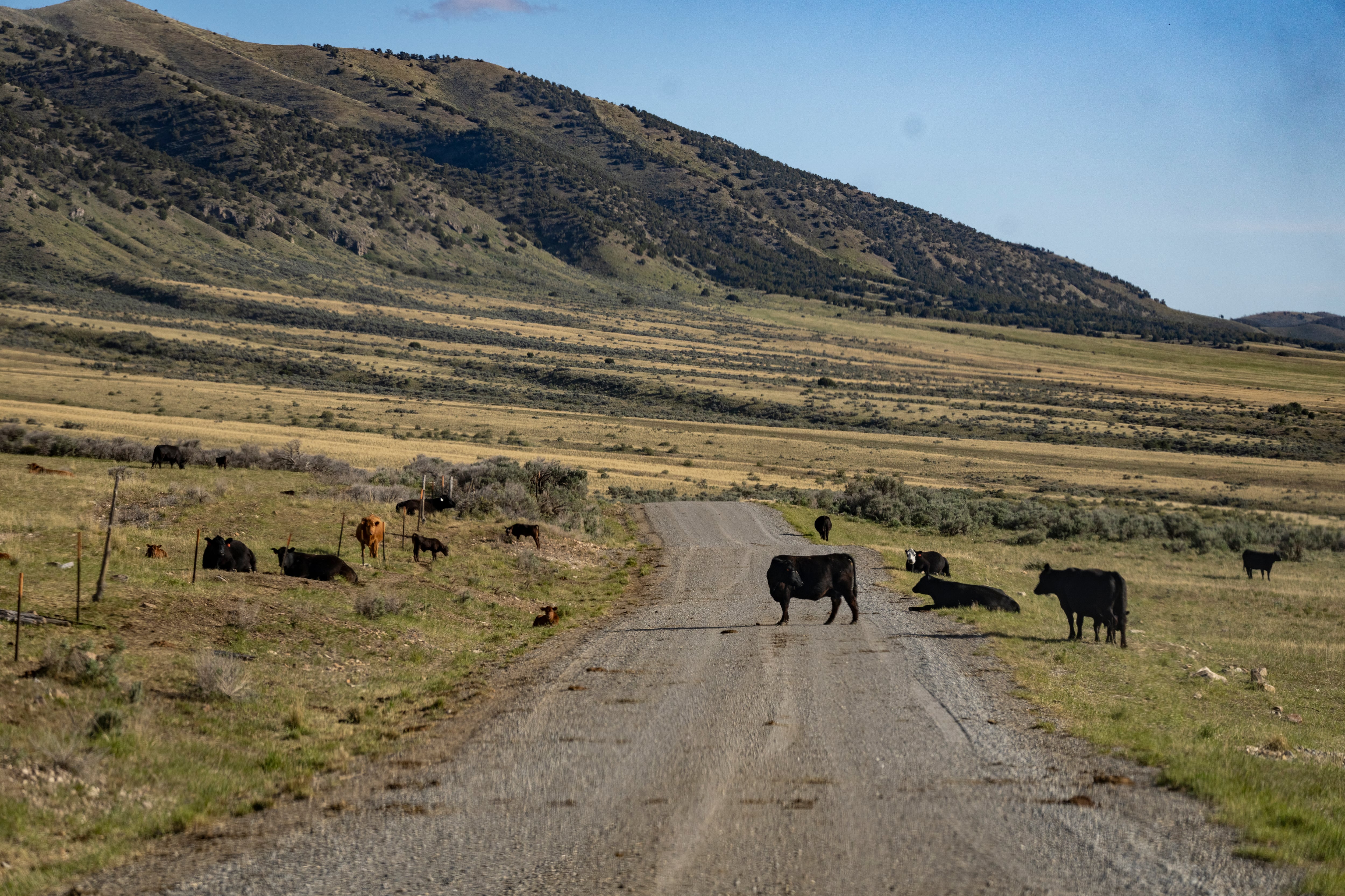
(Rick Egan | The Salt Lake Tribune) Hansel Valley Road on Tuesday, April 28, 2026.
The data campus operators say they will purchase roughly 3,000 acre‑feet of water rights and have around 10,000 acre‑feet under contract near Snowville if needed, said Austin Pritchett, co-founder of developer West GenCo, partnering with O’Leary on the project.
All said, that’s enough water to support the indoor water needs of more than 20,000 Utah homes. The Division of Water Rights has received one application for water so far — to transfer 1,900 acre-feet currently used for irrigation by the Bar H Ranch to the developers. But a division spokesperson said they anticipate more applications from the data center developers soon.
Pritchett said only “a very small fraction” of water rights secured by project developers would be used. A portion of the water would be shared with neighboring ranchers, he said, and passed to an aquifer that feeds into the Great Salt Lake.
State boosters previously said water used by the data center would be treated and sent to the drying lake, which will likely hit a new record low after Utah saw historically low snowpack and unseasonably warm spring temperatures.
But the Bar H water rights change application indicates much of the water would be used for a natural gas station that would power the data center, along with water for cooling the data center’s racks of servers.
It’s unclear whether that natural gas plant would be made up of generators, like the power plants proposed at other massive data campuses around the state, or whether it would be a traditional steam turbine plant, which also uses water for cooling.
Hilary Venable, MIDA project area director for Falcon Hill, said the data centers would use “closed-loop cooling systems” that continuously reuse water.
“Because of that, the long-term water demand is expected to be closer to what you would see from a large office campus,” Venable said, “not a traditional industrial use.”
As of Friday, the Utah Division of Water Rights had received roughly 500 protests and letters of concern over the water right application filed by the developers.
Nearly all of the protests expressed concerns over Utah’s water shortages and the struggling Great Salt Lake, which supports millions of migrating birds and is drying into a serious dust problem impacting the health of Wasatch Front dwellers. Residents from across the lake’s watershed wrote comments, from Smithfield to Heber to Salt Lake City to Provo.
More Tribune coverage of the data center project
How much energy?
The first phase of the project, which would be built in Hansel Valley, is expected to require about 3 gigawatts of power — nearly matching Utah’s average statewide electricity use of roughly 4 gigawatts. At full buildout, Paul Morris, MIDA’s executive director, said the campus would reach 9 gigawatts.
A gas plant supplying 9 gigawatts of electricity would be about 7.5 times larger than PacifiCorp’s Lake Side Power Plant in Vineyard.
The development agreement MIDA approved on April 24 allows O’Leary Digital to make a deal with TallGrass Energy for natural gas utility service through a connection to the Ruby Pipeline. The project would use that natural gas to generate its own power, Pritchett said.
That approach is allowed under a law passed last year, which allows private companies with energy demands of 100 megawatts or more to build their own generating stations that operate off the public grid.
The 680-mile interstate natural gas pipeline crosses northern Utah through Box Elder County on its route from Wyoming through Nevada to Oregon. It runs through the center of Hansel Valley, which Pritchett called the “catalyst” for the project.
Pritchett said the data center would tap into unused capacity on the pipeline that is not currently under contract. Because of that, he said it should not affect existing gas customers or raise rates.
Logan Mitchell, a climate scientist and energy advocate with Utah Clean Energy, has his doubts.
“Even if this project isn’t tied to the electricity grid,” Mitchell said, “it’s still going to be consuming an enormous amount of gas.”
All that consumption could put upward pressure on the price of natural gas in the region, Mitchell added. PacifiCorp – the parent company of Utah’s largest electricity provider, Rocky Mountain Power – revised its latest energy plans this year, indicating it intends to lean heavily on natural gas to meet the state’s future power demands.
Many other current and proposed data centers across the state are turning to natural gas to meet their electricity needs. Natural gas is almost entirely made of methane, a potent greenhouse gas.
“If they did build a nine-gigawatt data center,” Mitchell said, “there’s a real risk of stranded assets in the future, as climate change gets worse and worse and worse. I highly doubt that this thing would be operating for 30 years to kind of capture its return on investment.”
And burning natural gas releases nitrogen oxides, chemicals that bake in the sun and form particulate pollution during winter inversions and ozone smog in the summer across Utah.
The Stratos project lies on the northern shore of the Great Salt Lake, technically outside of the northern Wasatch Front nonattainment zone the Environmental Protection Agency has dinged for its bad air quality.
“But I have to imagine that those emissions sometimes will be blown south,” Mitchell said, “probably quite frequently.”
What is MIDA, and why is it involved?
(Trent Nelson | The Salt Lake Tribune) Hilary Venable answers questions as the Box Elder County Commission meets on a MIDA and Kevin O'Leary data center project in Brigham City on Monday, April 27, 2026.
MIDA is a quasi-governmental body formed in 2007 that assembles “project areas” containing at least some military land, like an Air Force base or a National Guard armory, then oversees development and infrastructure projects designed to generate tax revenue.
The organization has a team of about two dozen employees and an eight-member board that currently oversees six project areas statewide, effectively functioning as a local government.
MIDA – not the county or municipality – controls land use and planning decisions within the areas. The agency can also levy property and sales taxes on new development within project areas for future developments and offer tax incentives to entice developers.
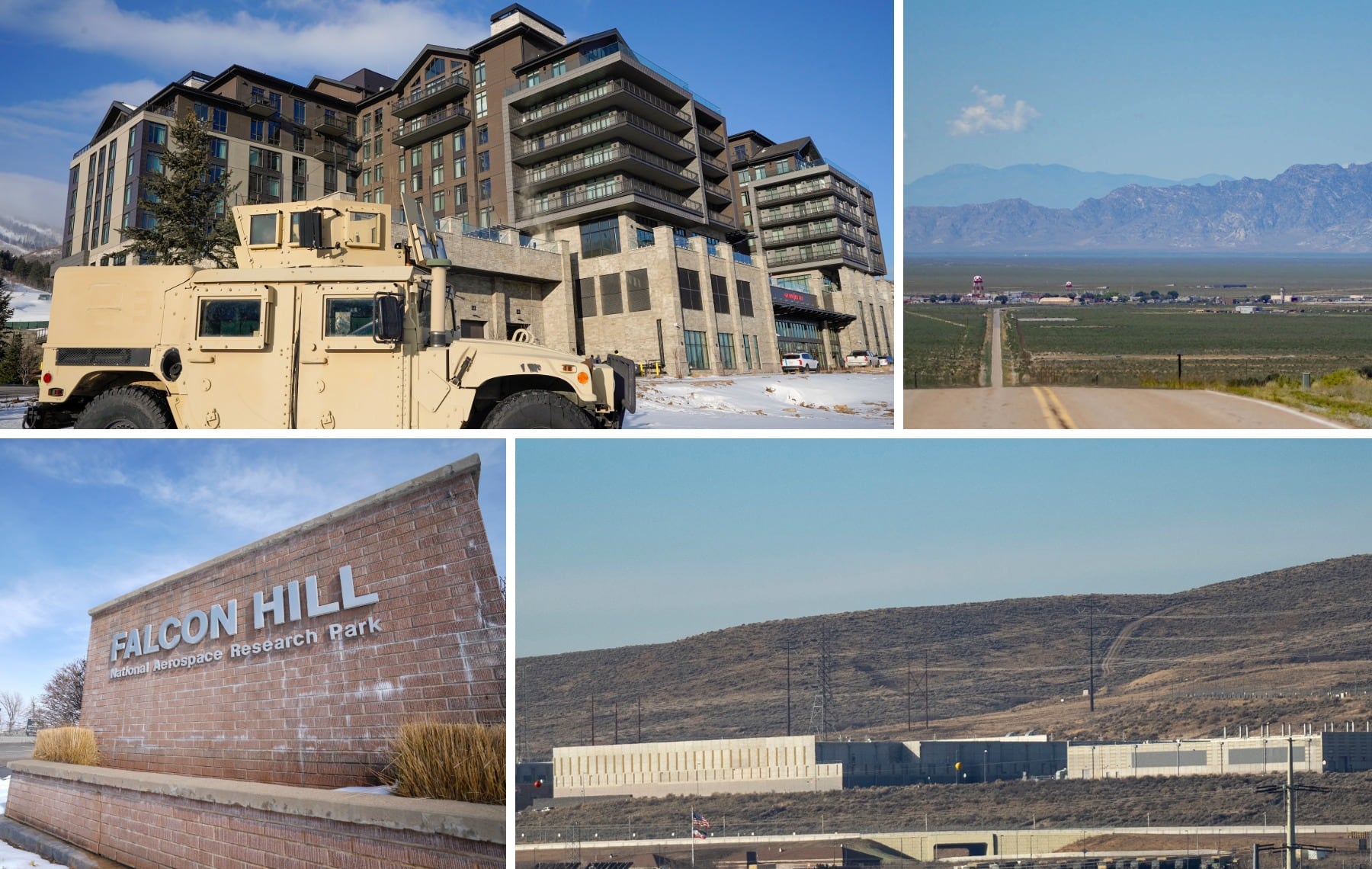
Those project areas boast developments like the Falcon Hill Research Park at Hill Air Force Base, the new inn at Sundance Mountain Resort and the massive East Village expansion at Deer Valley Ski Resort.
The hyperscale data project would be in a new project area called Stratos.
The area would include a section of the military’s Utah Test and Training Range and be associated with Air Force and National Guard properties throughout the state.
Venable, the project area director for Falcon Hill, said during Monday’s Box Elder County Commission meeting that the state land use authority receives several project proposals daily.
Not all of those fit MIDA’s needs, she said, but the data-center project would provide revenue to replace aging infrastructure on Hill Air Force Base and support “energy resilience and mission-critical systems tied to military operations.”
MIDA would collect an estimated $49 million a year in property taxes from the project once it’s fully built, sharing a slice with the state. And the project stands to raise more in energy taxes and from other revenue sources.
Who owns the private land?
(Christopher Cherrington | The Salt Lake Tribune)
According to MIDA’s paperwork on the complicated deal, there are 98 privately held parcels of Hansel Valley land at stake, clustered together in two large and distinct chunks roughly west of Tremonton, with a third smaller one farther north near Interstate 84.
On paper, there are 14 private property owners whose land makes up the main project site, according to Box Elder County property records. Many of them are LLCs registered to ranchers and others based in northern Utah and southern Idaho. Corporate records show at least two of the companies are registered to the same family, whittling the list down to 12 or 13 landowners
One landowner contacted by The Salt Lake Tribune said they were bound by a nondisclosure agreement barring them from sharing details on the immense data center deal.
Just over a third of the 40,000 acres — somewhere around 16,000 acres total spread over 33 parcels — are held by two Utah companies, Bar H Ranch Inc. and Bar H Land LLC. State documents show those are both registered to Shane Holmgren and family members, using a post office box in Bear River City.
Next up in total size are nearly 6,000 acres in 17 parcels held by Rock Creek Grazing LLC, based in Holbrook, a small unincorporated community about six miles north of the Utah-Idaho border. Documents at the Idaho secretary of state’s office show Kenneth Eliason of Holbrook as its registered agent.
The other, smaller private landholdings involved belong to other LLCs for ranching companies based in Utah and Idaho and a handful of family trusts, as well as a few individual Utah residents, with properties ranging in total size from 320 acres up to 3,700 acres.
It’s not entirely clear from state documents whether the private landowners envision selling or leasing their land for the Stratos project, although some landowners told the Box Elder County commission at an April 22 meeting that the developer and MIDA had sought to buy their land.
MIDA’s plans seem to anticipate both scenarios, with contract language saying it might carve existing parcels involved into smaller land plots “for offer, sale, lease, or development.”
How might the land be used?
(Rick Egan | The Salt Lake Tribune) Hansel Valley, near I-84, on Tuesday, April 28, 2026.
MIDA’s’s plans specify a process for creating sub-zones in the area devoted to:
• Energy and technology zones, or ET Zones, for large-scale energy generation and storage and technology uses, including data center campuses; electrical substations and utilities; heating and cooling facilities; and advanced manufacturing.
• Mixed-use zones, used for residential and light-commercial purposes.
• Agricultural areas.
MIDA documents also say each of the private landowners has provided their consent so far to be involved, but that individual master development plans will need to be approved before construction can occur on any of the properties.
Those plans, MIDA says, will require additional sign-off from each landowner involved.
What other land is involved?
MIDA is also including another 1,200 acres in the Stratos Project Area that take in a portion of the Department of Defense’s Utah Test and Training Range and a piece of property owned by the Utah Trust Lands Administration.
Those two parcels are grouped in a fourth location southwest of the private land clusters.
How long would the project take to build?
The project would take about 10 years to fully build, Venable said.
The first phase would be built in Hansel Valley where the gas pipeline runs through and where “the majority of the data and compute” would be located, Venable said.
The second phase would be built in Locomotive Springs, Pritchett said.
Any land not under development would continue to be used for agriculture, Venable said.
The developer plans to offer lease-back agreements during construction, she said, so the current ranchers can keep using the land while the project is being built.
What are the tax incentives and who profits?
MIDA can offer tax incentives that allow developers to claim decades-long rebates on the property taxes tied to the increased value they create in the project area. MIDA also can set special tax levies to raise funds and can issue bonds.
At the MIDA board meeting on April 24, Morris outlined proposed tax breaks — that the board then approved — for O’Leary’s project.
• MIDA’s standard 6% energy use tax on developments was reduced to 0.5% to remain competitive with other states trying to land deals with the same companies.
• Instead of a traditional certificate of occupancy — which would normally trigger full property taxation — the project would use a “letter of completion” that sets a 1.2% tax rate on a site’s value. From there, the tax is further reduced. The developer is first credited back enough to bring it in line with Box Elder County’s normal property tax rate, which Morris said is about 0.926%.
• Of the tax revenue collected at that rate, 80% would be directed to O’Leary Digital, Morris said.
• The remaining 20% would be split between the state and MIDA, Morris said.
• Once the project is at full buildout, MIDA would receive about $49 million a year to use for military purposes.
• The county is expected to see $30 million a year in the initial phase and more than $100 million annually once it reaches full capacity, Morris said.
• Personal property taxes also would be rebated for data centers, he said.
Would it strain municipal services?
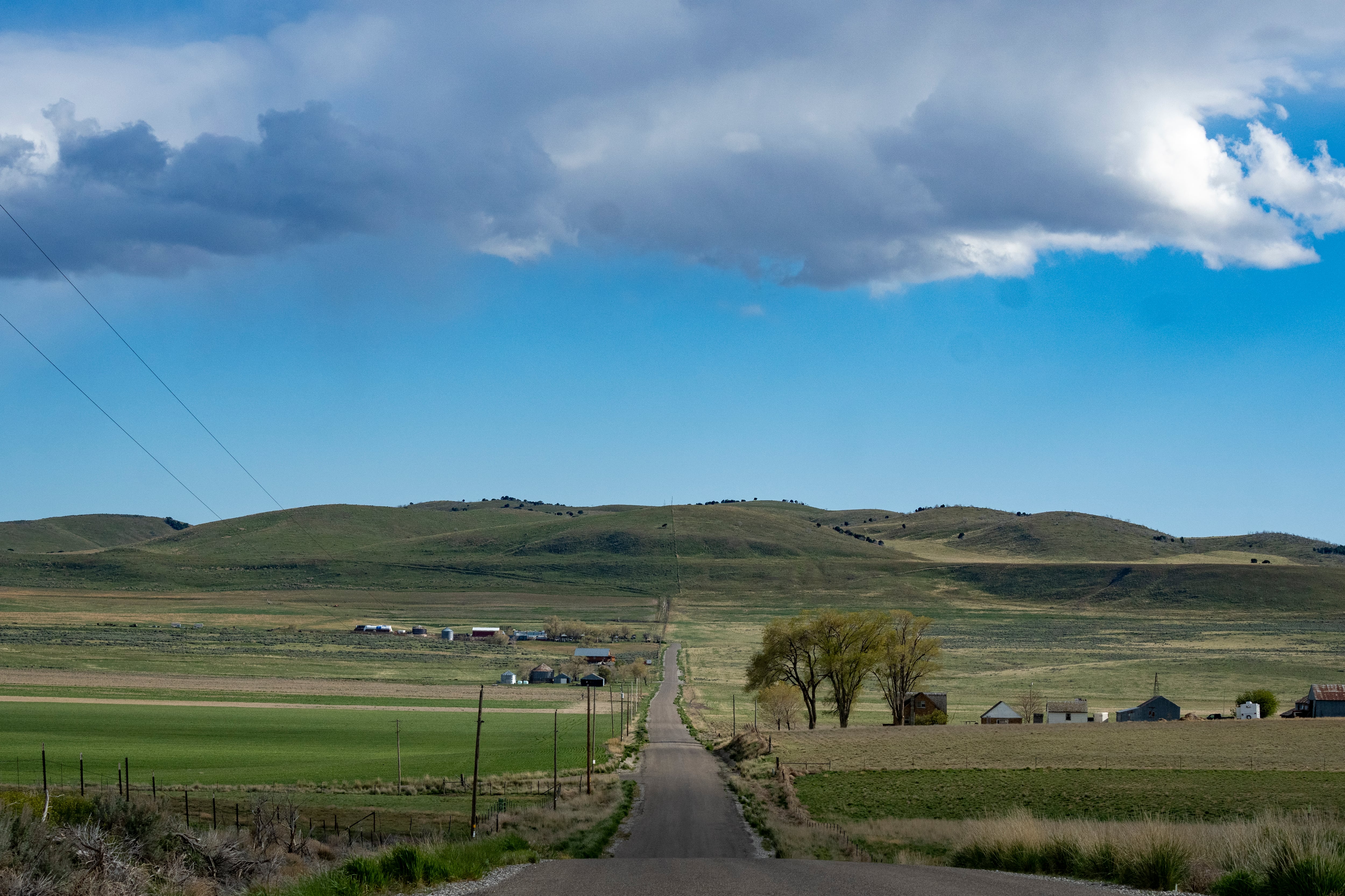
(Rick Egan | The Salt Lake Tribune) Hansel Valley on Tuesday, April 28, 2026.
During construction, the project is expected to create about 4,000 temporary jobs, with workers housed on-site, Venable said. Once fully operational, she said it would create about 2,000 “high-paying” permanent jobs.
“As a rule of thumb, each gigawatt is 1,000 jobs, and so we project many, many more,” Pritchett said. “The 2,000 is a pretty low benchmark.”
To tide the county over until tax money starts coming in from the project, Venable said the developer would prepay the county $5.4 million a year for the first three years.
This money would help the county hire new emergency staff like fire and police officers to handle the population increase while the project is being built, Venable said, giving the county time to “gear up.”
The developer is also footing the bill for all roads, sewer lines, stormwater systems and other public utility infrastructure created within the project area, Venable said. Once everything passes inspection, she said, that infrastructure would be deeded over to the county, which will then be responsible for maintaining it.
If the height of the buildings means specialized fire gear, like a ladder truck, is needed, the developer would cover that expense, too, Venable added.